

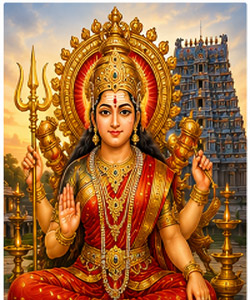
Goddess Budhi Thakurani Temple
Maa Budhi Thakurani Temple
Maa Budhi Thakurani Temple is the central shrine of Berhampur, Odisha, and one of the most important centres of goddess worship in southern Odisha. Maa Budhi Thakurani is revered as a protective mother deity and as the presiding guardian of the city. The temple stands in the old commercial heart of Berhampur, a city also known as Brahmapur and famous for its handloom traditions. Devotees visit throughout the year to offer prayers, seek blessings for their families and take part in the temple’s distinctive festival cycle.
The shrine is especially associated with the biennial Thakurani Jatra, a large public celebration in which the Goddess is ceremonially invited from her temple to a temporary abode at the home of the Desibehera, the hereditary head of the Dera weaver community. The procession and the Goddess’s stay among the community transform the ordinary city streets into a ritual landscape. The practice expresses a relationship of hospitality: the deity is welcomed as a daughter returning to her parental home. It also reflects the historical links between Berhampur’s urban identity, the Dera community and the city’s weaving heritage. The festival draws residents and visitors from across Ganjam and beyond, with processions, offerings, music and communal observances continuing over an extended period.
The jatra is much more than a spectacle. It renews vows and relationships between the Goddess, her devotees and the community that organizes her welcome. The festival timetable depends on the ritual calendar and local decisions, so visitors should check current announcements before travelling. During the jatra, crowds and traffic diversions are substantial; devotees should follow instructions from temple and civic authorities, particularly around processions and the temporary shrine. On ordinary days, the temple remains a place for daily worship and smaller offerings.
Berhampur’s growth as a commercial centre and its textile traditions provide important context for understanding the temple. The Goddess’s annual or biennial movement through the city brings religious life into neighbourhoods and public streets, making the jatra one of the defining shared events in the city’s calendar. The ritual does not replace worship at the main shrine; it extends the presence of the deity into the wider community.
Maa Budhi Thakurani Temple is significant as Berhampur’s guardian shrine and as the origin point of a major living festival that joins Shakti devotion with local social history. Its importance lies in daily worship as well as in the city-wide Thakurani Jatra. Visitors encounter a temple whose religious life is closely woven into the identity, craft traditions and communal memory of southern Odisha.