

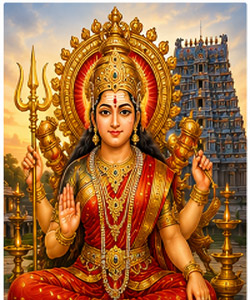
Goddess Biraja Temple
Maa Biraja Temple
Maa Biraja Temple in Jajpur, Odisha, is one of the state’s most important Shakti shrines and a major centre of Goddess worship. The presiding deity is Biraja, a form of Durga worshipped as Mahishasuramardini. The temple is also revered as a Shakti Peetha, with Jajpur’s tradition associating the site with the navel of Sati. The town itself is known as Biraja Kshetra and has long been a sacred destination for pilgrims travelling through Odisha.
The temple’s architecture preserves elements from different periods. The Odisha Hindu Religious Endowment Commission describes the main temple as approximately seventy feet high, with a lotus-pedestal base and a pida-style jagamohana. A chandi mandapa in front of the jagamohana is used for worship and recitation of the Devi Mahatmya, also known as Durga Saptashati. Fragmentary sculptures on the temple walls reflect the site’s layered history. The temple complex also includes spaces connected with Nabhi Gaya, where rites for ancestors are performed, making it a destination for both Shakti worship and ancestral observances.
Biraja’s annual calendar includes Navaratri and the distinctive Rath Yatra of the Goddess, when the deity is taken in a chariot. Devotees also come for daily darshan, offerings and recitation of sacred texts. The temple’s connection with Nabhi Gaya draws families who perform shraddha rites, linking the shrine to the broader Hindu tradition of honouring ancestors. These practices give Jajpur a particular place among Odisha’s pilgrimage towns.
Maa Biraja Temple is a living place of worship and one of the key centres of Shakta tradition in eastern India. Visitors should allow time to understand the different ritual areas and follow the temple’s guidance on offerings, dress and entry. The shrine’s importance rests on its Goddess tradition, its distinctive architecture and its role in both family rites and regional pilgrimage. Jajpur’s sacred identity continues to be shaped by the presence of Maa Biraja and the devotees who gather here throughout the year.
The temple’s Nabhi Gaya association is especially important for families who come to perform rites for departed relatives. It is one of the sites where Hindu ancestral rituals are carried out, and this practice gives Jajpur a role in pilgrimage that extends beyond Goddess worship. The Chandi mandapa also supports recitation of the Devi Mahatmya, a central scripture for devotees of Durga. The combination of daily worship, ancestral rites and the annual chariot festival makes Biraja a complex pilgrimage destination; visitors should allow time for the different observances and follow local instructions.