

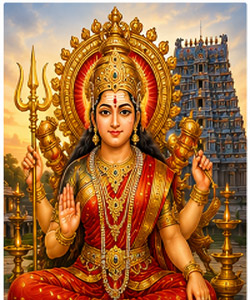
Goddess Mangala Temple
Maa Bata Mangala Temple
Maa Bata Mangala Temple is a shrine dedicated to Goddess Mangala on the road leading toward Puri, Odisha. It is traditionally regarded as a guardian temple for pilgrims approaching the sacred town, and many devotees stop here to seek the Goddess’s blessings before continuing to Puri and the Jagannath Temple. The name Bata Mangala is associated with the route or path, reflecting the shrine’s role as a protective presence for travellers.
The Goddess is worshipped as a compassionate form of Shakti who protects devotees and grants wellbeing. Daily puja and offerings continue throughout the year, while Navaratri and other Goddess-related observances bring special activity. The temple is located several kilometres from central Puri and is often included in a pilgrimage itinerary that links coastal shrines with the Jagannath tradition. Stories about the temple’s origins and its association with the protection of pilgrims are preserved locally and should be understood as devotional tradition.
The shrine has a modest scale compared with Puri’s monumental temples, but its position along the pilgrimage route gives it a special devotional significance. Pilgrims often pause here for darshan, offer coconuts, flowers or other customary offerings and pray for a safe journey. Local worshippers also visit for everyday blessings and family observances, so the temple’s role extends beyond travellers passing through.
Visitors should respect the temple’s ritual customs and allow time for darshan, especially during Navaratri and festival periods. The road location can be busy, so care is needed when entering or leaving the precinct. Maa Bata Mangala is important as a living shrine that connects the journey to Puri with the worship of the Goddess. Its significance lies in its protective role in local tradition, the daily puja maintained by its congregation and its place within the larger sacred landscape of the Puri region.
The name Bata Mangala is often explained through the Goddess’s position on the road toward Puri, where she welcomes and protects pilgrims before they reach the sacred town. The shrine is therefore sometimes treated as a first stop on a pilgrimage rather than an endpoint. Families travelling to Puri may pause for blessings and then continue toward Jagannath. This role remains part of the living devotional custom of the region and explains why the temple receives visitors even when no major festival is underway.
Pilgrims who make this stop often regard it as an invocation of protection for the journey and for the family waiting at home.