

Bhagavathi Temple
Kumaranalloor Devi Temple
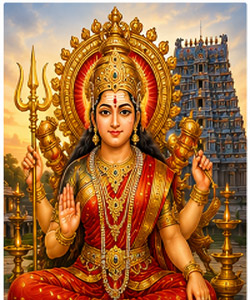
Kumaranalloor Devi Temple, also known as Kumaranalloor Karthyayani Devi Temple, is a major Goddess shrine in Kottayam district, Kerala. The temple is regarded as one of the important Devi temples in the state and is traditionally counted among Kerala’s 108 Durgalayas. The presiding deity is Karthyayani, a form of the Goddess worshipped for protection, well-being and grace. The temple is both a centre of daily devotion for local families and a destination for pilgrims who come for its festivals and distinctive sacred history.
The temple’s official account describes its origins through a story connected with Cheraman Perumal, a legendary ruler of Kerala. In the narrative, the king was building a temple for Kumara, or Subramanya, when a divine light led a priest from Madurai to the site. The Goddess was understood to have chosen the place, and the king later installed her image there. The story explains the name Kumaranalloor through the phrase that the village was not for Kumara but for Kumari, the Goddess. This is a temple tradition rather than an independently dated account, and the shrine’s reported ancient age should be treated as traditional chronology. The story remains important because it presents the temple as a place selected by the Goddess and links its worship to a network of older Kerala sacred narratives.
Kumaranalloor is notable for its architecture as well as its ritual life. The temple’s official materials call attention to the unusual Sri Chakra form of the sreekovil and nalambalam, and to the iconographic association of the Goddess with a Sri Chakra held in her right hand. The layout and sculptural details make the complex an interesting example of Kerala’s temple-building tradition. Its architecture is not simply a decorative backdrop: the arrangement of the sanctum and surrounding structures guides movement, ritual access and the experience of worship. Visitors should note that the inner areas function according to customary rules, and access may be restricted.
The annual Thrikarthika festival is dedicated to the Goddess and marks her birthday according to temple tradition. Kerala Tourism records a ten-day programme in the Malayalam month of Vrischikam, typically November or December, with ceremonial flag hoisting and other observances. Navaratri is another important occasion. The festival calendar brings together ritual, music and community participation, and the temple becomes particularly busy on the principal days. Anyone visiting during a festival should allow extra time and follow directions from temple staff.
Kumaranalloor’s importance can be understood through the convergence of a distinctive Sri Chakra-oriented architectural plan, a living tradition of Karthyayani worship and a narrative that places the Goddess at the centre of the village’s identity. The temple’s history includes sacred legend and community memory, while its official festival record helps document how worship continues today. It offers visitors a meaningful introduction to Kerala’s regional Devi traditions, provided they approach the site as an active place of devotion rather than only as a historic attraction.