

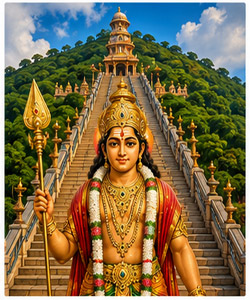
Subrahmanya Temple
Kodumbu Subramanya Swamy Temple
Kodumbu Subramanya Swamy Temple is a Murugan shrine in Kodumba, near Palakkad in Kerala. The presiding deity is Subramanya, also known as Murugan or Kalyana Subramanya, worshipped as the divine warrior and son of Shiva. The temple is especially notable because its history is connected with the Senguntha Kaikolar weaving community, whose migration from the Kanchipuram region brought Tamil devotional and cultural traditions into this part of Kerala. The temple remains an active place of worship and a significant centre for the community’s religious life.
The temple’s own history describes how Sengunthar Kaikolar families moved from Kanchipuram to Kodumbu during the Vijayanagara period, establishing a weaving settlement. According to this account, they brought a sacred stone associated with Subramanya and installed it within a Shiva temple, where it became the focus of worship as their family deity. The narrative explains the shrine’s unusual historical bond with a particular occupational community and its Tamil roots. It is a community tradition recorded in the temple’s own account; the precise chronology should be understood as a transmitted history rather than a modern archaeological dating of every structure.
The temple is known for its annual Ratholsavam, a chariot festival that takes place according to the Hindu calendar and brings together local devotees. Subramanya worship is especially important during Skanda Sashti and other occasions connected with Murugan, but visitors should check the temple’s current calendar for exact rites and dates. The festival and regular puja sustain a close relationship between the shrine, the weaving families and the wider Kodumbu community. The temple’s identity also reflects an interaction of regional traditions, with a Tamil community worshipping within Kerala’s broader temple landscape.
The shrine is accessible by road from Palakkad. The temple precinct centres on the sanctum and its ritual spaces, with devotees attending puja and making offerings in accordance with local custom. Visitors should observe appropriate dress, remove footwear where asked and seek guidance before taking photographs or entering restricted areas. Crowds are larger during festival periods, and local announcements are the best source for schedules.
Kodumbu Subramanya Swamy Temple is significant as a living Murugan shrine, as a place preserving the history and identity of the Senguntha Kaikolar community, and as a centre of the region’s Ratholsavam tradition. Its story helps explain how migration, craft and worship shaped Palakkad’s cultural history. The temple continues to serve devotees while preserving a distinctive devotional legacy within Kerala.