

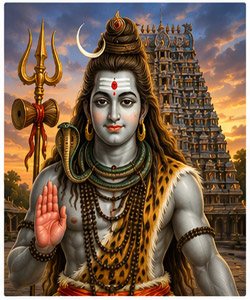
Mahadeva Temple
Kaviyoor Mahadeva Temple
Kaviyoor Mahadeva Temple, also known as Thrikkaviyoor Mahadeva Temple, is an important Shiva shrine in Kaviyoor, Pathanamthitta district, Kerala. The main sanctum enshrines a Shiva linga, and the temple has long been a centre of worship in the region. It is often discussed alongside the nearby Thrikkakkudi rock-cut cave temple, an early stone-cut Shaiva shrine that provides archaeological evidence for the antiquity of religious activity in Kaviyoor. The two sites are distinct monuments and should not be confused: the Mahadeva Temple is the active main shrine, while the cave temple is a separate protected heritage site.
Kerala Tourism describes the Mahadeva shrine as an ancient temple on the banks of the Manimala River and notes that its three-foot Shiva linga is carved from solid rock and installed in a square sanctum. The river setting is part of the temple’s sacred environment, connecting ritual bathing and the surrounding landscape with the act of worship. The temple is maintained as a heritage monument by the Archaeological Department, underscoring its historical and architectural importance. Regional government information also points to the cave temple at Kaviyoor as one of Kerala’s oldest rock-cut shrines, where a cylindrical linga is carved directly from the rock. Together, the main temple and cave shrine make Kaviyoor a significant centre for both pilgrimage and the study of Kerala’s temple history.
Kaviyoor is associated with Shaiva worship and with local traditions that connect the deity to the wider sacred history of the area. The exact dates and origin stories often vary across popular accounts, so a careful description should foreground the evidence that is supported: a long-established Shiva shrine, a notable stone linga, an important riverine setting and nearby early rock-cut religious architecture. Devotees visit for darshan, offerings and annual observances, while the surrounding precinct remains part of everyday local religious life.
The temple is best visited with time to understand both its active ritual role and its relation to the nearby cave site. Visitors should follow local directions about access and photography, especially around the sanctum and any protected archaeological areas. The riverside setting may be peaceful, but the temple is first and foremost a place of worship, and local customs should guide behaviour. The presence of both a living Mahadeva shrine and a rock-cut cave temple provides a rare opportunity to see different layers of Kerala’s religious architecture in one village.
Kaviyoor Mahadeva Temple is significant for its Shiva linga, its traditional Kerala temple form, its association with the Manimala River and its place in a wider heritage landscape that includes early rock-cut worship. It serves the devotional needs of the community while helping visitors understand the historical depth of Shaiva traditions in Pathanamthitta.