

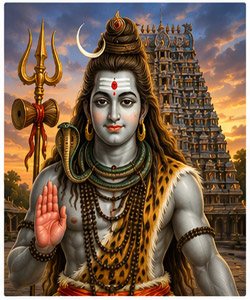
Lord Shiva (Chandrashekhar) Temple
Kapilash Chandrashekhar Temple
Kapilash Chandrashekhar Temple is a famous Shiva shrine on Kapilash Hill in Dhenkanal district, Odisha. The deity is worshipped as Chandrashekhar, a form of Shiva, and the elevated setting has earned the hill the devotional name “Kailash of Odisha.” Government and Odisha Tourism sources place the temple high on the Kapilash range, with the hilltop shrine forming the spiritual centre of the surrounding landscape. The temple is a pilgrimage destination as well as a landmark closely associated with Dhenkanal.
The climb and approach are integral to the experience. Traditional pilgrims ascend a long stone staircase to reach the shrine, while a road route also makes the hill accessible. The elevation, forested slopes and wide views make the journey feel distinct from a visit to a temple in a town centre. Visitors should treat the hill as a sacred environment and plan for the physical demands of the ascent. The temple’s setting reinforces the connection between Shiva and mountain sanctuaries, while the name Chandrashekhar recalls Shiva bearing the crescent moon.
The temple is especially lively during Maha Shivaratri, when devotees undertake night-long worship and the hill becomes a major focus of pilgrimage. The annual Jagar Yatra is associated with the observance, drawing worshippers from Dhenkanal and surrounding districts. Local religious tradition also connects Kapilash with revered teachers and figures in Odisha’s devotional history. Such associations contribute to the sacred reputation of the hill, though individual legends should be understood as part of the temple’s living tradition.
Kapilash is important because it combines daily Shiva worship with a larger pilgrimage setting. The shrine’s location, the ascent, the festival cycle and the wider cultural landscape all shape how devotees encounter the deity. The temple should not be described only as a scenic viewpoint: its central purpose is darshan of Chandrashekhar and participation in worship. At the same time, the landscape gives the visit a distinctive character that sets it apart from other Shiva temples in the region. Visitors should check current access conditions and festival arrangements before travelling, especially during crowded observances.
The official district tourism descriptions place Kapilash around twenty-six kilometres from Dhenkanal town and give the hill a height of roughly 2,150 to 2,239 feet, depending on the measurement source. The long stairway is a traditional approach, while a motorable route offers another way to reach the hilltop. These access options matter because the climb can be strenuous, particularly during hot weather or a crowded festival. Local accounts also associate the hill with spiritual teachers and religious movements in Odisha. Such histories and traditions enrich the place, but the temple’s central identity remains the active worship of Chandrashekhar Shiva.