

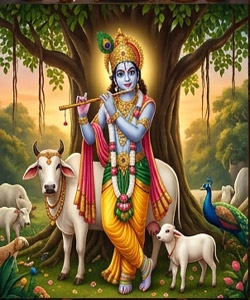
Radha Krishna Temple
ISKCON Temple
ISKCON Temple Bhubaneswar, also known as the Krishna Balaram Temple, is an active Vaishnava centre in the capital of Odisha. It belongs to the International Society for Krishna Consciousness, a worldwide Gaudiya Vaishnava movement dedicated to devotion to Krishna. The temple’s worship centres on Krishna and Balarama, with the congregational chanting, scripture study, kirtan and prasadam service characteristic of ISKCON communities. It welcomes residents, pilgrims and visitors interested in devotional practice and the movement’s role in contemporary Hindu life.
The temple’s history is closely connected with the arrival of ISKCON in Odisha. Organizational accounts state that A. C. Bhaktivedanta Swami Prabhupada encouraged the establishment of a temple in Bhubaneswar and laid its foundation stone in 1977, during a Nava-kalevara year. The project was undertaken to create a centre for worship and teaching in a city already known for its ancient Shaiva and Shakta temples. This connection between a modern devotional institution and Bhubaneswar’s old sacred landscape gives the temple a distinctive place among the city’s religious sites.
The temple hosts daily worship and festivals including Janmashtami, Rath Yatra and Balaram Jayanti. During the city’s Rath Yatra observance, the temple’s deities of Jagannath, Baladeva and Subhadra take part in a ceremonial procession to Gundicha Temple, following a local devotional practice inspired by Puri’s chariot festival. The annual calendar includes kirtan, discourses and community meals, so the temple functions not only as a shrine but also as a centre for religious learning and service. Visitors should consult the temple’s current schedule, especially during major festivals when the compound and surrounding roads can be crowded.
ISKCON’s devotional practice emphasizes bhakti, or loving service to Krishna, through chanting the Hare Krishna maha-mantra, worship of the deity, study of texts such as the Bhagavad Gita and sharing sanctified food. These activities are open to visitors according to temple etiquette. Modest dress, respectful conduct and attention to instructions around the altar and photography are appropriate. The temple’s practices may differ from those of older Odishan shrines, while remaining part of the broader Vaishnava tradition.
ISKCON Temple Bhubaneswar is significant as a living centre of Gaudiya Vaishnava worship, as a modern religious institution established in the late twentieth century, and as a participant in the city’s Jagannath festival culture. It offers visitors a view of contemporary Hindu devotional life alongside Bhubaneswar’s ancient temples. Its daily kirtan, festival processions and community service make it an active spiritual centre rather than simply a place to see architecture.