

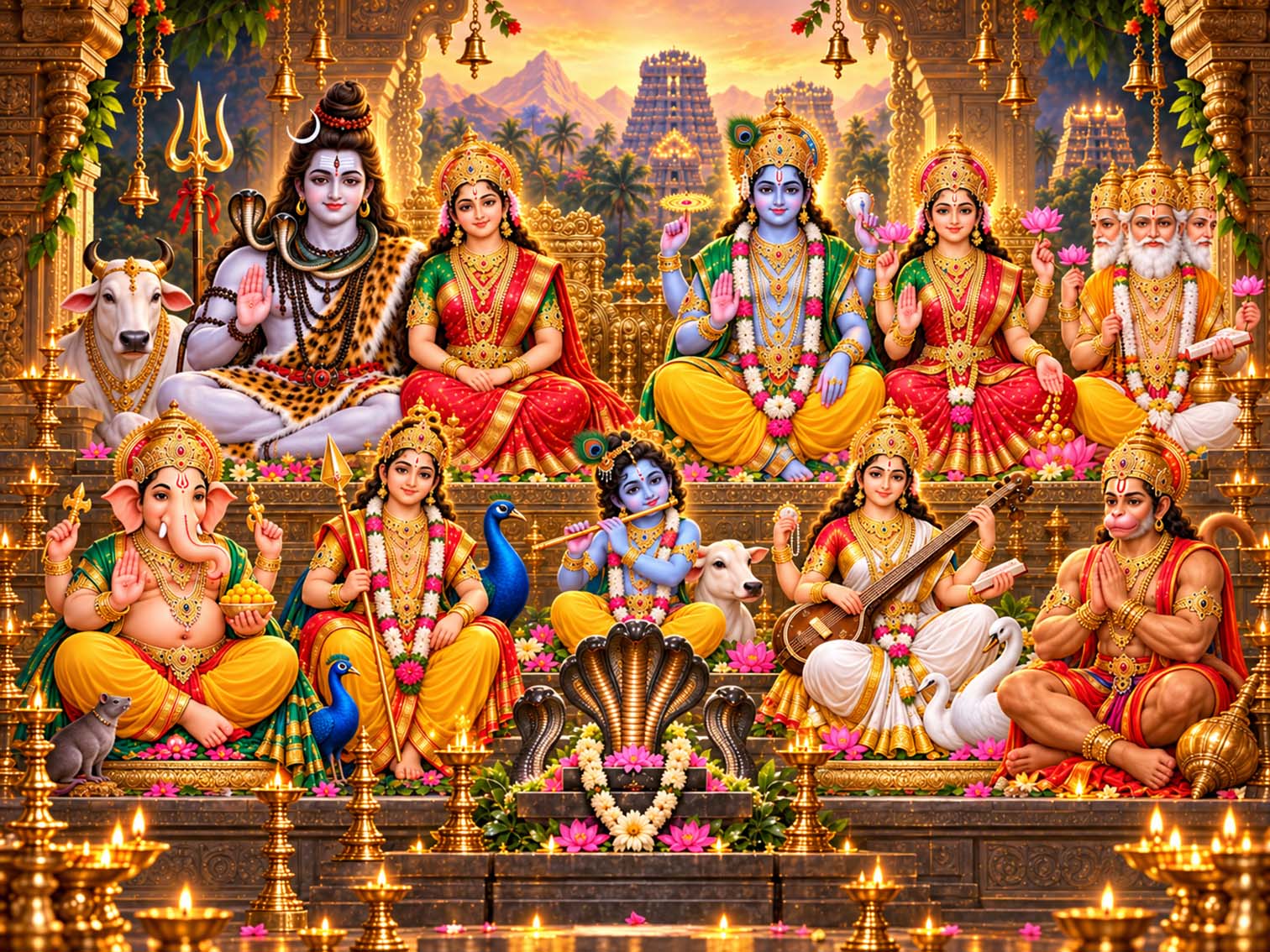
Lord Dattatreya Temple
Dattatreya Temple Girnar
Dattatreya Temple Girnar is a Hindu place of worship in Girnar, Junagadh, Gujarat. The Dattatreya shrine crowns Girnar, the sacred mountain above Junagadh. Pilgrims climb the long stairway to the summit and the deity's padukas; the route also passes other Hindu and Jain shrines, making the ascent itself a major part of pilgrimage. These specific features—its deity, local account, architecture or festival—are what distinguish the shrine from temples with similar names. The place is best understood through the connection between its presiding form, the community that maintains it and the landscape in which worship takes place.
The temple's history is carried through a mix of inscriptions, institutional records, local accounts and sacred tradition. These sources can tell different kinds of stories: a documented date or patron is not the same as a Puranic legend, and each should be identified clearly. At Dattatreya Temple Girnar, the temple-specific details above provide the firmest guide to its past and present role. Devotees' traditions remain important because they explain the meaning of the shrine and the reasons people make the journey.
Jain tirthas honour the Jinas, teachers who attained liberation and exemplify restraint, knowledge and compassion. Darshan, meditation and reverence before the Tirthankara images shape worship. The images, pilgrimage landscape and community stewardship define this site's character; visitors should follow local guidance on footwear, food, photography and conduct in the precinct. The form enshrined at Dattatreya Temple Girnar gives the wider tradition a distinct local expression. Darshan is the central encounter: devotees approach the sanctum, offer prayer and receive the deity's presence according to the temple's customary sequence. The image, its attributes and the practices attached to it matter more than a generic description of the religion; they are the details that make this particular shrine meaningful.
The physical approach also shapes worship. The entrance, courtyard, mandapa and sanctum direct movement, while a hill, river, cave, tank, fort or neighbourhood can become part of the sacred setting. In Girnar, Junagadh, the temple remains connected to ordinary community life as well as to the wider pilgrimage map. Where the building is historic, surviving stonework and later additions reveal layers of regional craft and patronage; the site is both a living institution and a record of changing local history.
The temple connects present-day Jain practice with the long history of pilgrimage and patronage. Where the site includes a monumental image or several shrines, these features express the community's devotional and artistic investment. Its significance is both spiritual and cultural, sustained by continuing worship and care. At Dattatreya Temple Girnar, the exact puja sequence, offerings, access and festival arrangements follow the temple's own tradition. Visitors should observe posted instructions, leave space for worshippers and treat processions and ceremonies as religious acts. Festival dates can move with the lunar calendar, so current temple notices are the best guide for planning.
The shrine's continuing importance depends on priests, trustees, families and pilgrims who maintain its rites and pass its story forward. Local people may come for regular prayer, while visitors arrive for the deity, a specific legend, a historic feature or an annual gathering. That shared use gives Dattatreya Temple Girnar a role beyond its architecture: it remains a place where worship, memory and community life meet. A respectful visit notices those living practices alongside the temple's distinctive history.