

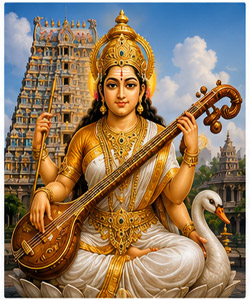
Saraswati Temple
Dakshina Mookambika Temple, North Paravur
Dakshina Mookambika Temple is a Saraswati and Mookambika shrine in North Paravur, Ernakulam district, Kerala. The temple is dedicated to the Goddess as Mookambika, the divine source of learning, music and knowledge. The name “Dakshina Mookambika,” or Southern Mookambika, reflects the shrine’s relationship to the renowned Mookambika tradition of Kollur while giving it a distinct place in Kerala’s own devotional landscape. The temple draws worshippers seeking blessings for education, creative practice and family well-being.
According to the temple’s own account, the shrine was established around five centuries ago after a ruler who could no longer travel to Kollur prayed for a Mookambika temple at Paravur. This is the temple’s received history and should be understood as a local tradition rather than as an archaeological date. The belief that prayers here carry a spiritual connection to Kollur has helped make the shrine an important pilgrimage destination for devotees in central Kerala. The temple’s identity is not simply a copy of the northern shrine: its local history, ritual calendar and community practices are specific to North Paravur.
Navaratri is the principal festival period. The temple trust records a ten-day celebration with special pujas, homam, alankara worship, annadanam and Vidyarambham, the ceremony in which children are introduced to letters and learning. This emphasis on education is closely connected with the Goddess’s identity as Saraswati. Families bring children to seek blessings before schooling or artistic study, while musicians and performers also visit to offer their devotion. The festival is a particularly meaningful time to understand how Mookambika worship is linked with knowledge and the arts in Kerala.
Daily worship continues throughout the year, and devotees come for darshan and offerings. Visitors should follow temple rules on dress, access and photography, particularly during Navaratri when the precinct is busy with families and ritual activity. The temple’s role as a place of learning is expressed through practices such as Vidyarambham, but it remains first a sacred shrine, not a school or public performance venue.
Dakshina Mookambika Temple is significant as a regional centre of Mookambika and Saraswati worship, as a place where children’s introduction to learning is marked by ritual, and as a temple whose own history connects North Paravur with the larger Kollur tradition. Its annual Navaratri celebrations, ongoing puja and local devotional identity make it an important religious institution in Ernakulam district. Visitors can appreciate its role in Kerala’s cultural life while approaching the Goddess with the respect due to an active place of worship.