

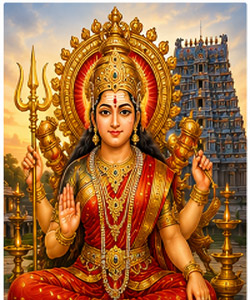
Goddess Chamunda Temple
Chamunda Mata Temple
Chamunda Mata Temple crowns Chotila Hill in Gujarat’s Surendranagar district and is one of the most recognized Goddess pilgrimage sites in the region. The presiding deity is Chamunda Mata, a fierce and protective form of the Divine Mother. The district administration places the shrine on the summit of Chotila Mountain, which rises to roughly 1,250 feet, and identifies the hill as a defining landmark of the town. The temple is reached by a long staircase, making the climb itself part of the devotional journey.
Chamunda is revered as a form of Durga who destroys harmful forces and protects devotees. Local traditions connect the hill with the Goddess’s appearance and with ancient Shakta worship, though individual origin accounts vary and should be understood as sacred narratives rather than archaeological chronology. Pilgrims climb the steps to seek the Mother’s blessings, offer prayers and experience darshan at the hilltop sanctum. The ascent has a strong communal quality: families, groups of devotees and individual pilgrims make the climb throughout the year, often carrying offerings for the Goddess.
Navaratri is the most prominent festival season, when the temple attracts especially large crowds and the hill becomes a major centre of worship. Other auspicious days dedicated to Durga and Chamunda also bring pilgrims from across Gujarat. The shrine is active through the year, and the town’s identity is closely connected to the temple. The district administration notes Chotila’s location between Rajkot and Ahmedabad, which helps explain the shrine’s accessibility as a regional pilgrimage stop.
Visitors should prepare for the climb, carry water in warm weather and follow the temple’s instructions for darshan and offerings. The hilltop setting offers expansive views, but the primary purpose of the journey is worship of Chamunda Mata. The temple’s significance rests on the living devotion to the Goddess, the shared experience of the ascent and the role of the shrine in Gujarat’s Shakti pilgrimage tradition. It is a place where landscape, ritual and faith come together in a memorable form.
The district tourism description identifies the shrine at the summit of Chotila Mountain and notes the hill’s height and regional location. The ascent is a defining part of the pilgrimage: devotees climb to the sanctum through a stair route that is traditionally counted at roughly seven hundred steps, though the exact count can vary by source. The hill is exposed to sun, so water and sensible footwear are useful. The view from the summit is memorable, but visitors should keep the focus on darshan and follow temple guidance during the busy Navaratri season.