

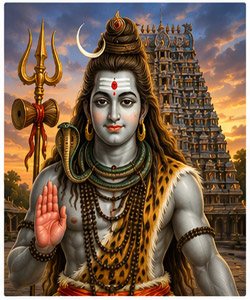
Shiva Temple
Shri Baba Augharnath Shiv Mandir
Shri Baba Augharnath Shiv Mandir, also called Augarnath Temple, is a prominent Shiva shrine in Meerut, Uttar Pradesh. The temple is dedicated to Lord Shiva and holds a special place in the city’s history. The Meerut district administration notes that the First War of Indian Independence of 1857 was witnessed at this site, linking the shrine with one of the most consequential events in modern Indian history. This association makes Augharnath both an active place of worship and a site of national historical memory.
The temple is often called Kali Paltan Mandir because of its proximity to the cantonment and the Indian soldiers who worshipped here during the colonial period. Local histories connect the shrine with the early events and discussions surrounding the 1857 uprising. While accounts differ about exactly what occurred within the temple precinct, its location near the military lines and the role of the Meerut cantonment in the revolt are well established. The shrine’s religious identity remains independent of the political history: devotees continue to worship Mahadev through daily puja and offerings.
The presiding deity is Shiva, worshipped in the form of a linga. Mondays, Shravan and Maha Shivaratri are important periods for darshan and abhishekam. The temple also receives visitors interested in Meerut’s history, and interpretive displays or nearby memorials help explain its connection with 1857. Visitors should make room for worshippers and follow local norms while viewing the site.
Augharnath’s importance comes from the rare convergence of religious continuity and historical memory. It remains a functioning Shiva temple, while also serving as a reminder of Meerut’s role in the struggle against colonial rule. Pilgrims come to seek Shiva’s grace; others come to learn about the city’s past. A thoughtful visit recognizes both dimensions without treating the shrine merely as a monument. The temple continues to serve its congregation and contributes to Meerut’s identity as a city with a deep Shaiva tradition and a pivotal place in modern Indian history.
The 1857 connection is a reason that many visitors include Augharnath in a historical tour of Meerut, but the temple’s religious life continues independently of that remembrance. It is still a place where devotees come to offer water to the linga and pray to Shiva. The district administration’s description of the temple’s role in the First War of Independence gives visitors an official point of reference, while local narratives provide further detail. A respectful visit gives attention to both the active shrine and its association with the uprising.