

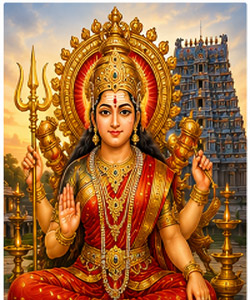
Masani Amman Temple
Arulmigu Masani Amman Temple
Arulmigu Masani Amman Temple is one of the most famous and revered Amman temples in the Pollachi–Anaimalai region of Coimbatore district, Tamil Nadu. The temple is dedicated to Goddess Masani Amman, who is worshipped as a powerful manifestation of Shakti and is particularly associated with justice, protection and the removal of obstacles. The temple stands near the meeting point of the Aliyar River and the Uppar stream, adding to the natural beauty and spiritual atmosphere of the site.
The most remarkable feature of the temple is the unusual form of its presiding deity. Unlike most Amman temples, where the goddess is represented in a standing or seated posture, Masani Amman is depicted reclining. The deity is traditionally identified as Mayana Sayani, referring to the goddess in a reclining form associated with the cremation-ground tradition.
This distinctive representation is one of the main reasons the temple has become such an important pilgrimage destination. Devotees believe that the goddess listens to their grievances and grants and was ruled by a chieftain named an oral tradition concerning a mango tree belonging to the ruler. The ruler had prohibited people from legend, one day a young woman who was bathing in the river happened to eat a mango that had naturally fallen into the water. When the ruler learned of this, he ordered her to be killed despite her innocence. Her father reportedly offered compensation, including gold equivalent to her weight in the cremation ground, and a figure representing her was established over the burial site. Over time, she came to be worshipped of justice. justice and protection
According to the temple's traditional history, the region was once known as Nannanur and was ruled by a chieftain named Nannan during the Sangam period. The official temple history preserves an oral tradition concerning a mango tree belonging to the ruler. The ruler had prohibited people from taking its fruits.
According to the legend, one day a young woman who was bathing in the river happened to eat a mango that had naturally fallen into the water. When the ruler learned of this, he ordered her to be killed despite her innocence. Her father reportedly offered compensation, including gold equivalent to her weight and 81 elephants, but the ruler refused.
The woman was subsequently buried in the cremation ground, and a figure representing her was established over the burial site. Over time, she came to be worshipped as Masani Amman, the divine embodiment of justice.
Because of this tradition, the goddess is especially revered by people One stone with their grievances well-known devotional practice involves the paste to the justice stone while praying for wrongs to be corrected. This is a religious tradition and expression of faith rather than a legal mechanism, but it has become one of the temple's best-known customs. many practice symbolizes surrendering their problems to the goddess and seeking who believe they have suffered injustice, loss or wrongdoing.
Masani Amman Temple is popularly regarded as a “Temple of Justice”. One of its distinctive features is the Neethi Kal, or Justice Stone. Devotees traditionally approach the sacred stone with their grievances and prayers.
A well-known devotional practice involves grinding red chillies and applying the paste to the justice stone while praying for wrongs to be corrected. This is a religious tradition and expression of faith rather than a legal mechanism, but it has become one of the temple's best-known customs.
The temple's festival traditions include various special rituals and devotional activities, with the annual celebrations creating a vibrant atmosphere throughout Anaimalai.